The 20-year Patent Term
The standard patent term is set at 20 years from the earliest effective filing date. But that’s really just the baseline. The actual term depends on a series of prosecution decisions, USPTO delays, and other factors.
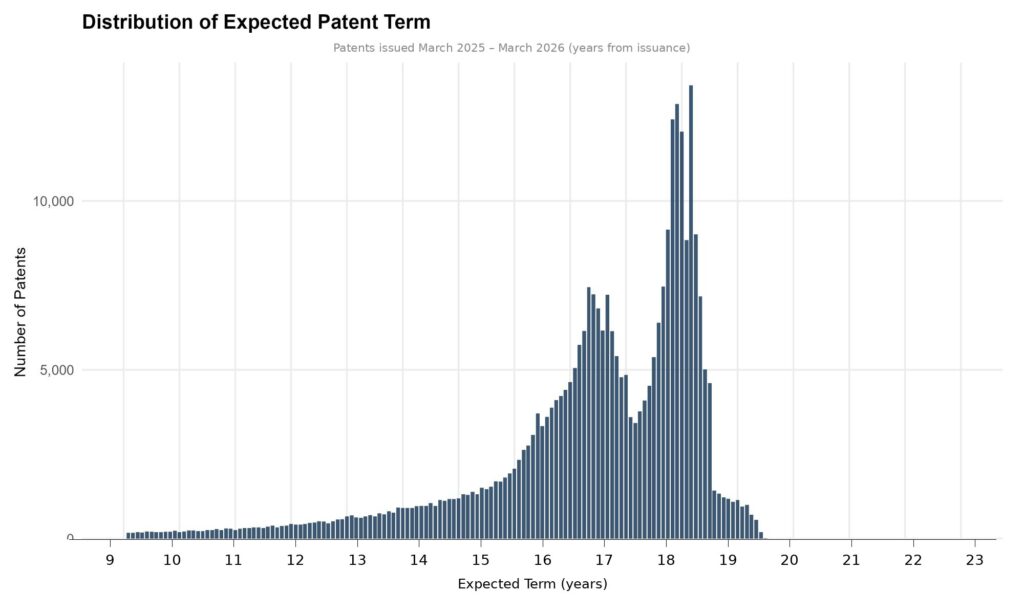
Patently-O, a blog dedicated to issues surrounding patent law, published the chart below showing “the distribution of expected remaining patent term (measured from issuance) for utility patents issued between March 2025 and March 2026.”
The Distribution of Remaining Term Lengths
At the far-right edge, there are a smaller number of patents that achieved close to the theoretical 20 years from filing. They used the accelerated examination options, the patents issued quickly, and they used up very little of the 20-year clock. There are two main spikes: around 18.5 and 17 years, which correspond to the typical examination timeline, and adding the Patent Term Adjustment (PTA) to compensate for processing delays.
Moving further to the right the patents with the shortest remaining terms are those that typically had extended prosecution histories. The majority of issued patents have more than 12 years of expected term remaining at issuance.
The Economic Tradeoff and Maintenance Fees
But the blog post points out a related issue. The final maintenance fee comes due 11.5 years after issuance. That fee is over $8k for large entities and in many cases providing only a few extra years of protection. The cost to benefit calculation might be leading more patent holders to just let the patent expire rather than pay the fee.
The Real Patent Term Picture
Patent term distribution ultimately provides a clearer picture of how the system operates. It shows that the twenty-year rule is only a starting point. Real outcomes depend on timing, strategy, and administrative realities. The result is a system where patent value can vary significantly at issuance.