What Is the Doctrine of Equivalents in U.S. Patent Law?
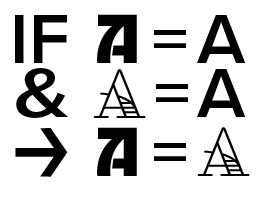
The Doctrine of Equivalents is a legal principle in U.S. patent law that allows a court to find infringement even when the accused product or process does not literally fall within the scope of a patent claim, as long as it is equivalent in a meaningful way.
The Function-Way-Result (FWR) test is one of the primary tools used to assess this equivalence.
How the Function-Way-Result (FWR) Test Works
Under the FWR test, a court or jury evaluates whether the accused product or process:
- Performs substantially the same function as the claimed invention.
- Operates in substantially the same way as the claimed invention.
- Achieves substantially the same result as the claimed invention.
If all three criteria are met, the accused product or process may infringe under the doctrine of equivalents.
Applying the Function-Way-Result Test: A Nail-and-Screw Example
The classic analogy is: suppose a patent claim covers a method of joining two wooden planks together “using a nail.” An accused product instead uses a screw to fasten the planks. Although the literal language of the claim specifies a nail, a court applying the doctrine of equivalents could find infringement. That is because both the nail and the screw perform the same function of fastening the planks together, they operate in substantially the same way by penetrating the wood and holding the pieces in place, and they achieve the same result of creating a secure joint. Thus, under the Function-Way-Result test, a screw may be considered an equivalent to a nail in this context.
Limits on the Doctrine of Equivalents: Prosecution History Estoppel
Note that the Doctrine of Equivalents is generally not available for claim elements that were narrowed during prosecution for reasons related to patentability, unless the patentee can successfully rebut the presumption of estoppel. However, if the amendment was not related to patentability, or the patentee can show the change was tangential, DOE may still apply.