A recent Federal Circuit decision, Applied Predictive Technologies, Inc. v. MarketDial, Inc. (Jan. 28, 2026), offers a blunt reminder for companies relying on trade secret protection: trade secret enforcement requires clear definition- especially after key people move on.
The Case in Brief: Applied Predictive v. MarketDial
Applied Predictive Technologies (APT) sued a competing analytics startup founded by a former McKinsey consultant who had evaluated APT’s software while working for a client. APT claimed that documents, technical guides, and client-specific data had been misappropriated under the Defend Trade Secrets Act and Utah law.
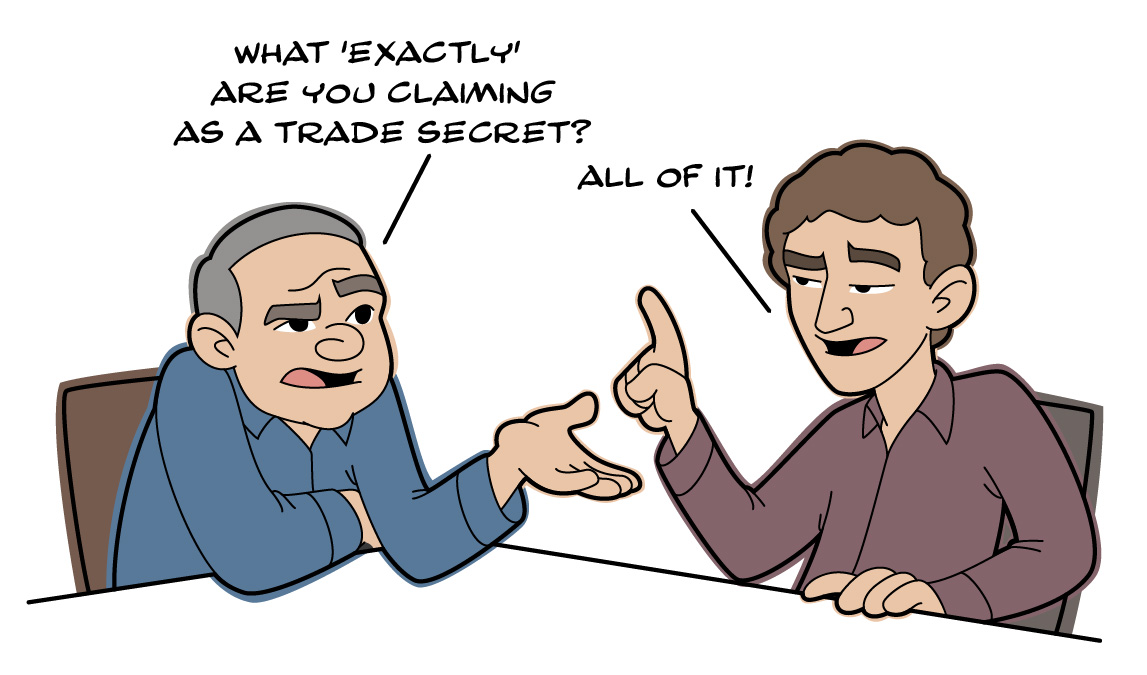
Both the district court and the Federal Circuit rejected APT’s claims at summary judgment. The problem wasn’t a lack of documents or experts, it was a lack of specificity. APT pointed to broad categories like “strategies” and “methods,” but never explained what, exactly, made those things secret, non-public, and economically valuable.
Why This Matters for Companies Relying on Trade Secrets
This case underscores a growing reality in trade secret litigation: courts will not do the plaintiff’s homework. Saying “this document is a trade secret” or dumping volumes of material into the record is not enough.
By summary judgment, companies must precisely identify what information is secret, why it is not generally known, and how its secrecy creates value.
For companies worried about losing inventors or key technical staff, the lesson is clear. Trade secrets must be defined before people leave, not retroactively in litigation. Vague claims that a departing employee “knows our approach” are unlikely to survive scrutiny.
The decision also highlights a structural risk when sensitive information is shared through consultants or third parties. APT had confidentiality agreements with McKinsey, and McKinsey had obligations to its employee, but APT could not directly enforce those obligations against the individual. Contractual protection does not automatically flow downstream.
What the Decision Means for Inventors and Founders
The ruling is equally important for inventors, engineers, and founders who move on to new ventures. The court reaffirmed a long-standing principle: employees and consultants are free to use the general knowledge and skills they acquire through their work, even when they later compete.
Learning how systems work, how problems are framed, and how technologies are evaluated does not automatically convert that knowledge into someone else’s trade secret. Former employers must identify specific, protectable information, not claim ownership over everything a person learned on the job.
That said, the line still matters. Reusing documents, code, or clearly defined confidential implementations can create real exposure. Building new systems based on experience, rather than copying prior materials, remains the safer path.
The Bottom Line on Trade Secret Enforcement
Trade secret law protects defined secrecy, not broad claims over human capital. Companies that want to retain value when inventors leave must clearly identify and guard their secrets. Inventors, meanwhile, are entitled to take their expertise with them so long as they leave the secrets behind.