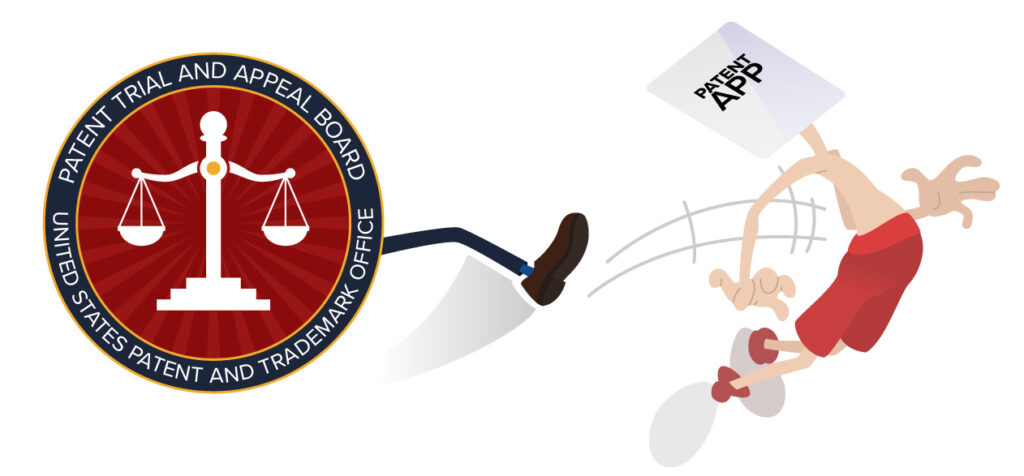
For years, Section 101 rejections have been the biggest obstacle for software and computer-implemented inventions. Recently, however, the Patent Trial and Appeal Board (PTAB) has been reversing those rejections at a much higher rate. This suggests a meaningful shift in how patent eligibility is being evaluated at the USPTO.
What is a Section 101 rejection in Software Patent Law?
Section 101 defines what types of inventions are eligible for patent protection. Courts have long held that abstract ideas—including many business methods and software concepts—are not patentable on their own.
In practice, examiners often reject software claims by arguing that they are directed to an abstract idea and merely implemented using generic computer components, such as standard servers or networks. Under the Supreme Court’s Alice framework, claims that lack an “inventive concept” beyond that abstract idea are ineligible.
How PTAB Decisions Are Changing Section 101 Eligibility Analysis
Recent PTAB decisions indicate that the Board is no longer accepting conclusory assertions that claimed elements are “well-understood, routine, and conventional.”
Instead, the PTAB is increasingly requiring actual evidentiary support for those conclusions. This is consistent with Federal Circuit precedent such as BASCOM and Berkheimer.
Critically, the Board is recognizing that an inventive concept can exist in a non-conventional arrangement of otherwise conventional computing components. Labeling servers or networks as “ordinary” is no longer enough to establish that a particular claimed combination was routine.
What Recent PTAB Section 101 Rulings Mean for Software Inventors
This trend does not make abstract ideas patentable, nor does it eliminate Section 101 as a hurdle. But it does improve patent prospects for inventions that:
- solve concrete technical problems (e.g., latency, synchronization, security), and
- do so through specific technical architectures or system arrangements.
For many applicants, eligibility disputes may increasingly give way to more traditional patentability issues such as prior art and obviousness.
Why Software Patent Drafting Still Matters Under Section 101
This shift rewards well-drafted applications, not broad or purely functional claims. Applications that clearly explain the technical problem and the technical solution are best positioned to benefit from the PTAB’s approach.
The PTO is not reopening the door to all software patents—but it is demanding more rigor in how eligibility rejections are justified. For inventors with genuine technical innovations, that makes Section 101 a more predictable—and more navigable—part of the patent process.
The changing landscape of Sec 101 rejections as seen in this post from earlier in 2025: The Harsh Reality of Sec 101 Appeals