The ol’ “Switcheroo”: One Argument in Discovery, the Opposite in Trial
Every so often, the Federal Circuit hands down a decision that’s less about patents and more about human nature. Magēmā (pronounced: Maggie-May) Technology v. Phillips 66 is one of those cases.
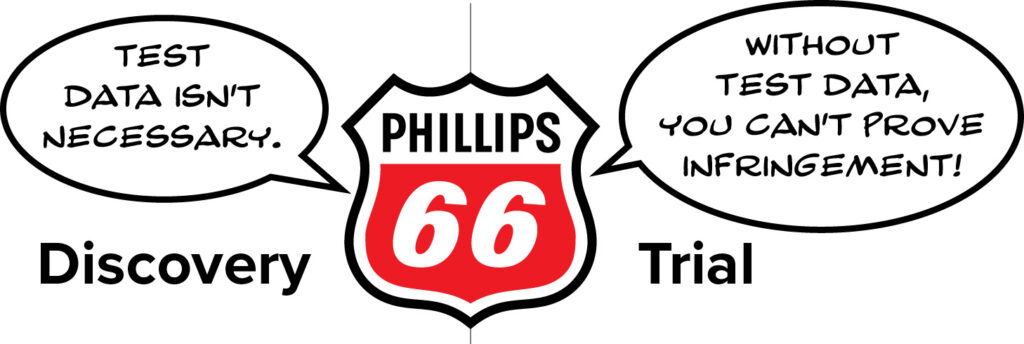
In the initial trial, Phillips convinced the magistrate during discovery that Magēmā didn’t need actual test data. It would be “too dangerous” to obtain the test data, so formulas would be good enough. Then, once trial rolled around, Phillips told the jury the exact opposite: no test data, no infringement.
Magēmā objected but the district court overruled, and the jury came back with a broad-brush “no infringement.”
The Appellate Judge Notices the Discrepancy
But on appeal, the Federal Circuit said, hold on a second. When a party spends the whole trial hammering on a theory it promised wasn’t necessary in discovery, you don’t get to call that “harmless error.” Judge Bumb, sitting by designation, had the perfect metaphor: this wasn’t pepper sprinkled here and there — the whole trial was marinated in it.
Phillips 66 is Forced to Play by Its Initial Argument
So, new trial. Phillips’ gamesmanship, instead of locking in a win, ended up boomeranging right back at them.
Magēmā also tried to raise a claim construction issue under O2 Micro, but that one fizzled. You can’t complain about claim scope being left to the jury if you never asked the court to construe the terms in the first place.
Because I hate litigation gamesmanship, I am very happy to see this outcome. Unfortunately it is allowed way too often. But at least this time, the party playing the games didn’t profit.
Some related articles on court shenanigans: Generic Drug Label Doesn’t Induce Patent Infringement Just by Listing Optional Refrigeration