In a closely watched decision, the Federal Circuit delivered a clear message. Simply applying machine learning to a new domain is not enough. Unless the ML itself improves, the invention will not qualify for a patent.
In Recentive Analytics, Inc. v. Fox Corp. (No. 2023-2437, Apr. 18, 2025), the court affirmed dismissal of four patents. Those patents were held by Recentive Analytics. Each focused on using machine learning for TV broadcast scheduling and event planning.
Although the court acknowledged AI’s growing importance, it drew a firm boundary. Patent eligibility under 35 U.S.C. § 101 still requires more.
Federal Circuit Decision on AI Patent Eligibility
At its core, the case addresses a pressing question. When does applying artificial intelligence make an invention patent-eligible?
According to the Federal Circuit, Section 101 applies fully to AI-related inventions. Merely invoking machine learning will not suffice. Instead, the patent must claim a concrete technological improvement.
In other words, automation alone is not innovation.
The Patents at Issue in Recentive Analytics v. Fox
Recentive’s patents fell into two categories.
Machine Learning Training Patents
First, the training patents claimed systems for generating optimized live event schedules. These schedules relied on historical data. The goal was dynamic, real-time optimization.
Network Map Patents
Second, the network map patents addressed channel assignments. They focused on how television programs were distributed across regions and times.
Overall, the inventions aimed to replace manual scheduling. In its place, they proposed automated optimization using machine learning.
Why the Federal Circuit Found the AI Patents Ineligible
The court emphasized a central principle. Generic machine learning methods are abstract ideas. Without a specific technological improvement, they remain ineligible. Applying ML to a manual task, such as TV scheduling, did not change the outcome. Section 101 requires more than digitizing an existing process. As the court explained:
“Patents that do no more than claim the application of generic machine learning to new data environments… are patent ineligible under § 101.”
That language leaves little room for doubt.
Why the Machine Learning Patents Failed Under Section 101
Several deficiencies proved fatal to the claims.
No New Machine Learning Technology
Importantly, Recentive admitted it did not invent a new ML algorithm. Rather, it used existing techniques. The court viewed this as little more than saying “do it with AI.” A new application alone was not enough.
No Specific Implementation Details
Equally problematic, the patents lacked technical detail. They did not explain how the ML models operated.
Nor did they describe any improvement to computer functionality. Without that specificity, the claims remained abstract.
Limiting AI to a Field of Use Is Not Enough
Recentive argued that applying ML to broadcasting made the invention patentable. However, the court disagreed. Limiting an abstract idea to one industry does not make it less abstract. This principle has appeared repeatedly in Section 101 cases.
Increased Speed Does Not Equal Patent Eligibility
The patents also emphasized efficiency and automation. Yet faster processing does not automatically create eligibility. Courts have long rejected speed alone as an inventive concept. That reasoning applied here as well.
No Inventive Concept Under the Alice Framework
Finally, the court considered step two of the Alice framework. Even there, it found nothing “significantly more” than the abstract idea itself. As a result, the claims failed both steps of the analysis.
What This Decision Means for AI and Machine Learning Patents
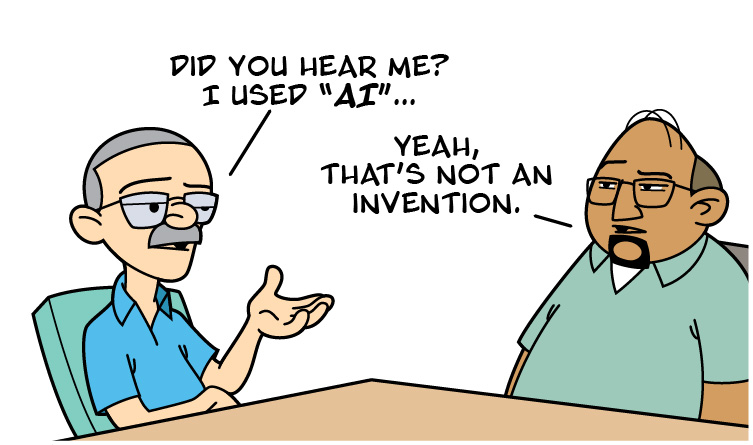
Taken together, the ruling draws a bright line. Using AI is not the same as improving AI.
For patent eligibility, applicants must identify a specific technological advance. Simply automating a manual workflow will not suffice. Likewise, applying known techniques to new data will not qualify.
Importantly, the decision does not eliminate AI patents altogether. Innovations that enhance machine learning technology may still succeed. However, the claims must show real technical progress.
Key Takeaways for AI Patent Applicants
As AI becomes embedded in more industries, scrutiny will increase. Section 101 remains a powerful filter.
Therefore, patent applicants should focus on technical improvements. Detailed implementation matters. Concrete advances in machine learning matter even more.
Without those elements, AI-based claims may struggle to survive.
Related AI articles: USPTO AI subject matter eligibility guidance