Generic Drug Labels and Inducement to Patent Infringement
In the ever-evolving world of pharmaceutical patent law, a recent Federal Circuit decision offers guidance on when a generic drug label may induce patent infringement. The case, Metacel Pharmaceuticals LLC v. Rubicon Research Private Ltd., focused on storage instructions for Rubicon’s generic version of Metacel’s Ozobax® oral baclofen solution.
Metacel held U.S. Patent No. 10,610,502, which included a method claim requiring storage of the baclofen solution at refrigerated temperatures between 2°C and 8°C. When Rubicon sought FDA approval through an ANDA, its proposed label instructed storage at room temperature but also stated that the product “can also be stored at 2°C to 8°C.”
Metacel argued that this optional refrigeration language would lead physicians and other healthcare providers to infringe the patented method. Both the District Court and the Federal Circuit disagreed, holding that Rubicon’s label did not induce infringement.
Federal Circuit Rejects Inducement Based on Optional Storage Instructions
The Federal Circuit’s analysis centered on whether Rubicon’s label encouraged or recommended infringement, as opposed to merely permitting it. The court emphasized that inducement requires affirmative encouragement of infringing conduct.
Here, the label’s primary instruction was to store the product at room temperature, which was non-infringing. The refrigeration language was framed as optional rather than mandatory.
Judge Lourie, writing for the panel, explained that the label conveyed that “if a downstream user decides to refrigerate the product, despite instructions to store the product at room temperature (which is noninfringing), then it should store the product at temperatures from 2°C to 8°C.” That permissive statement, the court held, did not amount to inducement.
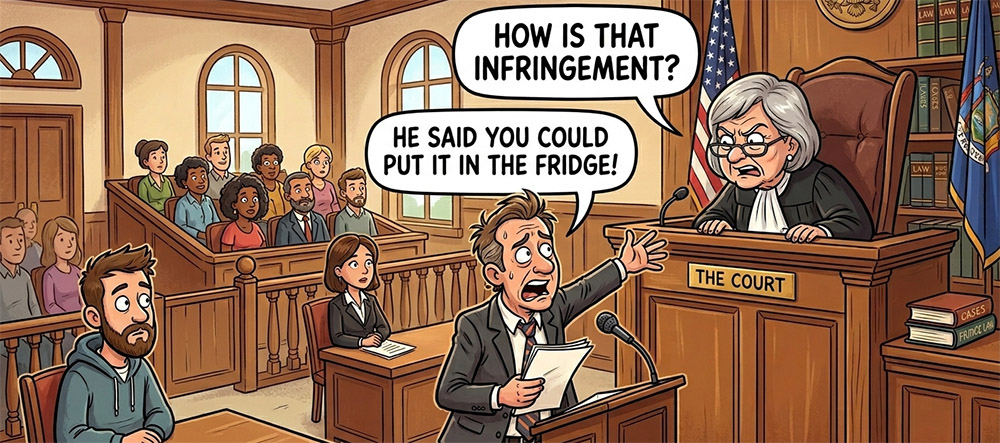
Permissive Label Language Does Not Induce Patent Infringement
The decision aligns with prior Federal Circuit precedent, including HZNP Meds. LLC v. Actavis Labs. UT, Inc. In that case, the court similarly held that permissive label language does not necessarily encourage infringement, particularly where the label does not require performance of the patented method.
The key distinction is between language that merely allows a potentially infringing use and language that directs or recommends it. Where a label primarily instructs users toward a non-infringing use, optional references to infringing conditions are generally insufficient to establish inducement.
ANDA Statements Cannot Override the Drug Label’s Instructions
Metacel also relied on statements Rubicon made in its ANDA regarding refrigeration. However, both courts rejected that argument.
The Federal Circuit reiterated that inducement analysis focuses on what healthcare providers actually see and follow. That means the operative document is the drug label, not internal regulatory filings. Statements made during the ANDA process cannot transform otherwise permissive label language into inducement.
The relevant question remains whether the label itself instructs users to perform the patented method.
ANDA Statements Cannot Override the Drug Label’s Instructions
The court further emphasized that when label language is clear and unambiguous, extrinsic evidence cannot override its plain meaning. Even circumstantial evidence suggesting potential infringing use is insufficient where the label does not affirmatively encourage that use.
This reinforces the importance of careful label drafting. Courts will rely on the actual words presented to end users, rather than speculative interpretations or regulatory background materials.
Implications for Generic Drug Labels and Patent Inducement Claims
This decision confirms that generic drug manufacturers retain some flexibility when drafting labels. Including optional information does not automatically create inducement liability, provided the label’s primary instructions direct users toward non-infringing conduct.
For patentees, the case highlights the difficulty of establishing inducement based solely on permissive label language. For generic manufacturers, it underscores the value of precise wording that distinguishes between required instructions and optional conditions.
Ultimately, Metacel v. Rubicon serves as a reminder that in patent inducement cases, label language matters—and clarity can be decisive.
Related articles on patent law infringement cases: Divided Infringement