Federal Circuit Draws New Limits on Injunctions and Orange Book Listings
In a decision likely to affect the pharmaceutical industry, the Federal Circuit ruled in Jazz Pharmaceuticals, Inc. v. Avadel CNS Pharmaceuticals, LLC. The court clarified limits on injunctive relief and patent listings under the Hatch-Waxman Act.
Notably, the May 6, 2025 ruling made one point clear. Even when infringement is found, courts cannot block certain regulatory activities. That remains true if those activities fall within the Act’s “safe harbor” provision.
A Closer Look at the Dispute
Xyrem, GHB, and a Patented Distribution System
The case centered on Jazz’s narcolepsy drug, Xyrem. The drug contains GHB, a powerful sedative with known abuse risks.
To manage those risks, Jazz patented a single-pharmacy distribution system. That system tracks and controls how Xyrem is dispensed.
Meanwhile, Avadel sought FDA approval for FT218. Like Xyrem, it is GHB-based. However, FT218 uses a once-nightly dose and a different distribution approach.
The NDA Filing and Orange Book Challenge
When Avadel filed its New Drug Application, the FDA required a patent certification. That requirement stemmed from Jazz’s patent being listed in the Orange Book.
Jazz then sued Avadel for infringement. In response, Avadel challenged the Orange Book listing itself.
Specifically, Avadel argued the patent did not claim a drug. Nor did it claim a method of using one. Those, however, are the only patents eligible for listing.
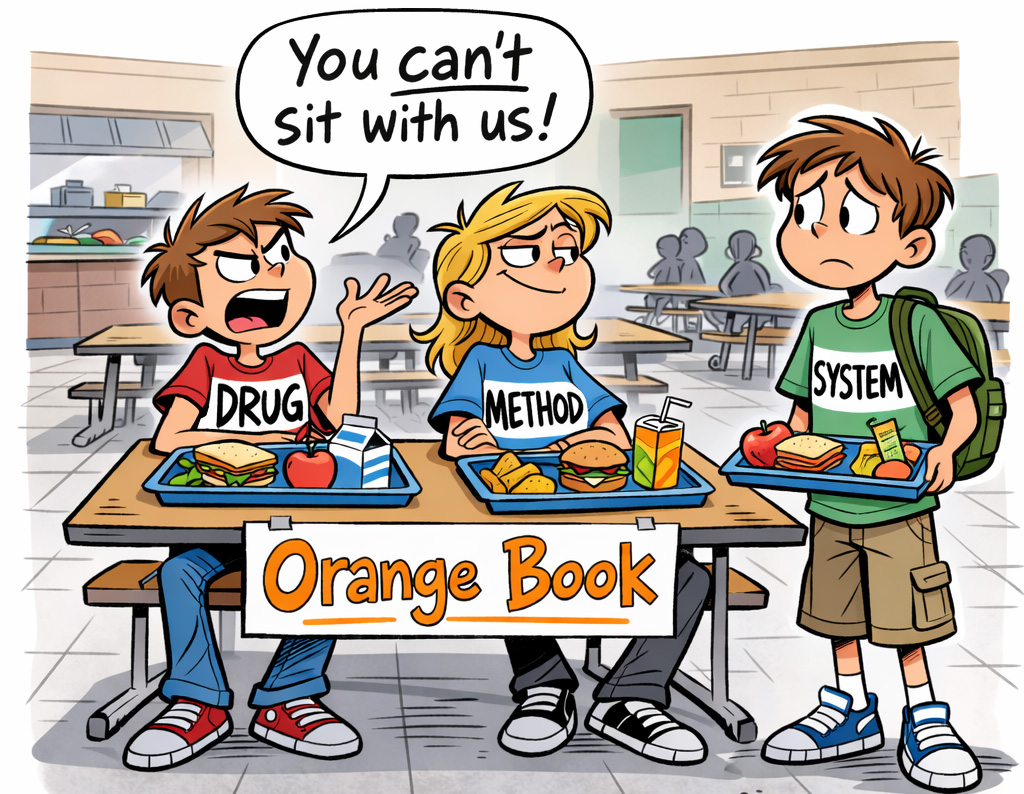
The District Court Agrees with Avadel
The district court sided with Avadel. It found Jazz’s claims covered a “system,” not a drug or method of use.
That distinction proved decisive. Under Hatch-Waxman, only drug compositions and methods of use qualify for Orange Book listing.
As a result, the court ordered Jazz to delist its patent. Jazz then appealed.
The Federal Circuit Affirms the Delisting
Why System Claims Still Are Not Method Claims
On appeal, Jazz raised two main arguments. First, it claimed the patent covered a method of using Xyrem. Second, it argued FDA regulations supported broader listing categories.
The Federal Circuit rejected both points. In doing so, it emphasized several principles:
- Method claims must recite specific steps.
- A system that enables use is not itself a method.
- FDA regulations do not override patent-law fundamentals.
- Prescribing conditions do not convert systems into methods of use.
Accordingly, the court upheld the delisting order.
Clinical Trials Remain Protected by the Safe Harbor
Jazz also sought to stop Avadel’s clinical research activities. That effort failed.
The Federal Circuit was unequivocal. Even where infringement exists, courts cannot block protected research.
This includes clinical trials and open-label extensions. If those activities fall within the Hatch-Waxman safe harbor, they may continue.
That protection, the court noted, serves a clear purpose. It promotes innovation while speeding FDA approval.
Why This Ruling Matters
Taken together, the decision reinforces a key boundary. Commercial infringement is distinct from regulatory research.
It also tightens Orange Book eligibility standards. As a result, system patents face greater scrutiny.
For brand-name companies, the message is direct. If a patent does not claim a drug or method of use, it does not belong in the Orange Book.
For generics and 505(b)(2) applicants, however, the ruling offers reassurance. It preserves the streamlined path to market. That remains true even when system-based innovation is involved.
Related articles on patent infringement: Generic Drug Label Doesn’t Induce Patent Infringement Just by Listing Optional Refrigeration