Patent Strategies for Nutraceutical and Wellness Innovations
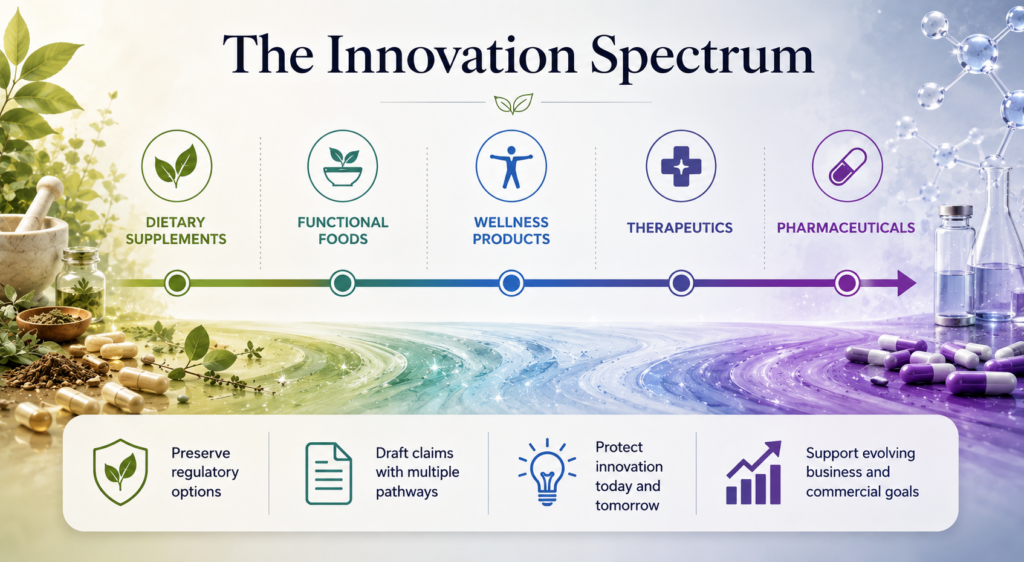
Innovators in the health and wellness space are increasingly developing products that sit somewhere between a dietary supplement and a pharmaceutical drug. A formulation may support healthy aging, metabolism, cognition, or recovery, while also showing measurable physiological or therapeutic effects. From a patent perspective, that creates both opportunity and complexity.
Preserving Regulatory and Commercial Flexibility in Patent Applications
One of the most important considerations when drafting a patent application in this area is preserving flexibility. The same invention may ultimately be marketed as a consumer wellness product, licensed as a medical technology, or developed through a pharmaceutical pathway. A patent application should ideally support all of those possibilities rather than locking the invention into a single regulatory category too early.
FDA Classification and Patent Drafting Language Considerations
Language matters. In the United States, FDA classification often depends heavily on intended use. Statements about “treating disease” can push a product toward drug characterization, while language focused on supporting normal structure or function may align more closely with dietary supplement positioning. For that reason, well-drafted applications often include both wellness-oriented and therapeutic embodiments so that future business and regulatory options remain open.
Claim Drafting Strategies for Supplement and Pharmaceutical Technologies
Claim strategy is equally important. Strong applications in this space frequently include multiple layers of protection, such as claims directed to:
- compositions and ingredient combinations,
- formulations and delivery systems,
- methods of use,
- manufacturing processes, and
- purified or standardized active components.
This broader approach can create more durable and commercially valuable patent coverage.
Patentability Challenges for Natural Products and Nutraceutical Formulations
Natural products and nutraceutical technologies also present unique patentability issues. Botanical extracts, peptides, probiotics, metabolites, and naturally occurring compounds often face heightened scrutiny under patent eligibility and obviousness standards. As a result, it is important to highlight what is truly inventive about the technology, whether that involves purification methods, synergistic combinations, improved bioavailability, novel dosing strategies, or unexpected functional results.
Strengthening Patent Applications with Technical Support and Enablement
Another key consideration is supporting the claims with sufficient technical detail. Recent patent law developments have increased the importance of enablement and written description support, particularly for broad functional claims. Including multiple examples, formulations, dosage ranges, and experimental data can significantly strengthen a patent application and provide valuable support for future continuation filings.
Aligning Patent Strategy with Long-Term Commercial Goals
Perhaps most importantly, patent strategy should be aligned with the client’s broader commercial goals. Early-stage companies often evolve rapidly, and products initially positioned as
supplements may later move into clinical development or strategic licensing opportunities. A thoughtfully drafted patent application can help preserve those future options.
The Growing Importance of Patent Protection for Wellness and Therapeutic Products
As the lines between supplements, wellness products, functional foods, and therapeutics continue to blur, careful patent drafting has become more important than ever. The best applications not only protect the invention itself, but also preserve the flexibility needed to adapt as science, regulation, and markets evolve.