Big news in the world of copyright. The Supreme Court just held that a service provider is contributorily liable only if it intended its service to be used for infringement.
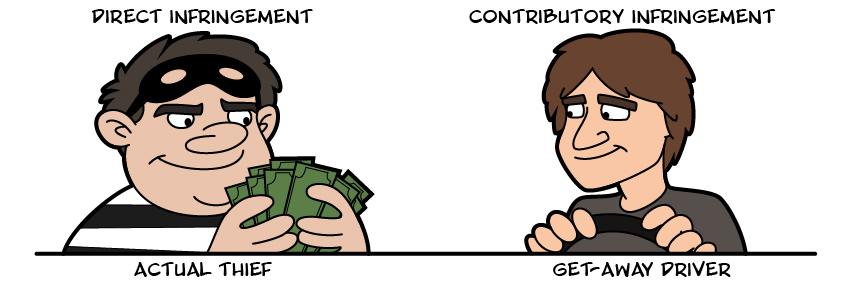
What Is Contributory Copyright Infringement?
Cox Communications, Inc. v. Sony Music Entertainment. The Supreme Court decided an Internet Service Provider (ISP) could not be held contributorily liable for its users’ copyright infringement simply because it knows about the infringement and continues providing service.
Contributory infringement, if you aren’t aware, is basically a second-hand infringement. It means the contributor isn’t directly violating copyrights but contributes to the infringing conduct of another party. In this case, Cox was charged with intending its service to be used for infringement.
A copyright owner can show this intention in two ways. The first is that Cox induced the infringement. The second is that Cox “sold a service tailored to infringement”.
The Role of Cox as an Internet Service Provider
Cox is a huge Internet Service Provider with around six million subscribers. But Cox itself has limited knowledge as to how their services are used. In the fine-print contract subscribers sign (but rarely actually read), Cox states that users are not to infringe copyrights.
How Sony Tracked Alleged Infringement
Sony Music used MarkMonitor to track infringement. MarkMonitor is software that detects when copyrighted works are illegally uploaded or downloaded. It traces the activity to specific IP addresses.
During a two-year period, it sent Cox over 160,000 notices identifying subscriber IP addresses associated with alleged infringement.
Sony’s Lawsuit and the $1 Billion Jury Verdict
Sony then sued Cox for contributory infringement, arguing that Cox continued to provide service to subscribers associated with violations. Cox responded that it took steps to limit infringement. It implemented a policy of cutting off infringing subscribers after 13 warnings. And, of course, there’s the contract that few ever read.
Sony noted that only 32 subscribers had been terminated for infringement, compared to the 160,000 detected instances. Sony also referenced internal employee statements suggesting Cox was unwilling to cut off subscribers due to lost revenue.
Cox defended itself by pointing out its suspension system addressed 98% of the identified infringement.
The jury sided with Sony and imposed a $1 Billion verdict. Appeals followed, with some adjustments along the way, but Cox’s basic misconduct was upheld.
The Supreme Court’s Decision: No Liability Without Intent
That changed when the case reached the Supreme Court.
The Supreme Court held that a service provider is contributorily liable only if it intended its service to be used for infringement. To prove that, Sony needed to show that Cox’s service was designed in the ways outlined above. This was not the case. Subscribers were warned not to infringe in the contract. Infringing subscribers were issued repeated warnings. And in some instances, repeat offenders were suspended or terminated. That’s hardly inducement to infringe.
Other articles related to copyrights and infringement: Call of Duty Lawsuit Ends Without Attorneys’ Fees for Activision
Ignorance of the Law may be an Excuse in Copyright Registration