Computer-Generated Design Guidance Background
Back in 2020, the USPTO asked for public input on “whether its interpretation of the article of manufacture requirement in the United States Code should be revised to protect digital designs that encompass new and emerging technologies.”
Nineteen comments were submitted. Twelve advocated that designs for projections, holograms, and virtual and augmented reality should be eligible for design patent protection.
Outdated USPTO Guidance Needed Update to Reflect Emerging Technology
In Nov 2023, the USPTO responded by publishing supplemental guidance. This would help determine whether a design claim including computer-generated electronic images constituted statutory subject matter under 35 USC 171.
However, the guidance didn’t address designs involving virtual or augmented reality. Following the publication of that guidance, the USPTO received additional public comments requesting clarification. Commenters noted that modern interfaces increasingly appear in projections, holograms, and virtual or augmented reality environments, rather than only on traditional computer displays or monitors.
Seven additional comments were submitted requesting further guidance.
Revised PTO Guidance Covers Newer Tech
On Friday March 13, 2026, the USPTO issued supplemental guidance. The guidance explains when computer-generated interfaces, icons, and emerging digital visuals can qualify for design patent protection.
This update reflects the reality that modern interfaces now appear in augmented reality, virtual reality, holograms, and projections, not just on traditional screens.
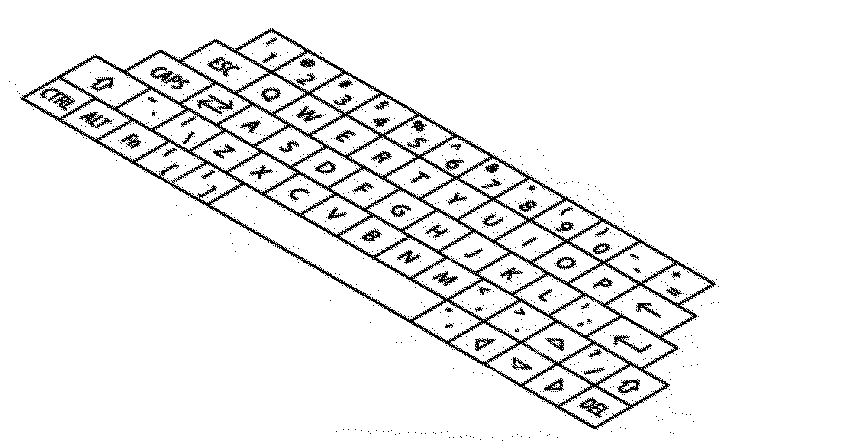
Image of a projection of a keyboard. One of the examples taken from the USPTO guidance.
1. Interfaces and icons can still be design-patent eligible
Design patents still require a design for an “article of manufacture.” Traditionally, this meant a graphical user interface or icon displayed on a computer screen or display panel.
The USPTO now confirms that computer-generated interfaces and icons can still qualify as design patent subject matter. However, they must be tied to a computer, computer system, or display and must be more than a disembodied image.
2. You no longer need to show a display screen in the drawings
Previously, design patent drawings typically had to show a display panel (often in broken lines) surrounding a GUI or icon. Under the new guidance:
- A display screen does not have to appear in the drawings
- As long as the title and claim clearly identify the article of manufacture, for example:
- “Icon for a display screen”
- “Graphical user interface for a computer system”
Inventors can still include a screen in the drawings if they want, but it is no longer mandatory.
3. AR, VR, projections, and holograms may be patentable designs
The USPTO explicitly states that designs such as:
- projections
- holograms
- augmented-reality interfaces
- virtual-reality interfaces
may qualify for design patents even if they are not displayed on a traditional monitor.
What matters is that the design is for a computer system and is not merely a floating, unrelated image.
The design must still be clearly disclosed
Even with this flexibility, applicants must still satisfy normal patent requirements. In particular:
- The drawings must clearly show the design
- There must be enough views to fully disclose the appearance
- The design must be ornamental, not purely functional
- The disclosure must meet clarity and enablement requirements
Claim wording matters
The USPTO now accepts claim language such as:
- “Icon for display screen”
- “GUI for display panel”
- “Projected interface for a computer”
- “Virtual reality interface for a computer”
- “Augmented reality interface for a computer”
These phrases properly link the design to an article of manufacture, satisfying the statute.
Pure images without a device connection are still not patentable
A stand-alone image or picture that is not tied to a computer, display, or computer system will still fail the article-of-manufacture requirement and be rejected.
For other articles related to design patents, see: The Latest Case in Enforcement of Design Patents