NEWS
Ignorance Of The Law May Be An Excuse In Copyright Registration
Supreme Court Decision in Unicolors v H&M
On February 24th, 2022, the Supreme Court has published a decision, Unicolors v H&M. Overall, the decision makes challenging the validity of a copyright registration much harder.
Copyright Registration and Infringement Lawsuits
Under the US Copyright Act, registration of a copyright is necessary to bring infringement suits. Therefore, alleged infringers often try to prove that the copyright registration is invalid. And on those grounds, the owner cannot bring the suit.
H&M’s Challenge to the Unicolors Registration
That strategy was used by H&M when Unicolors sued for infringement of several clothing patterns, and won at trial. H&M appealed, asserting that Unicolors’ registration was invalid due to an error in the application of the law.
The Key Legal Question Before the Court
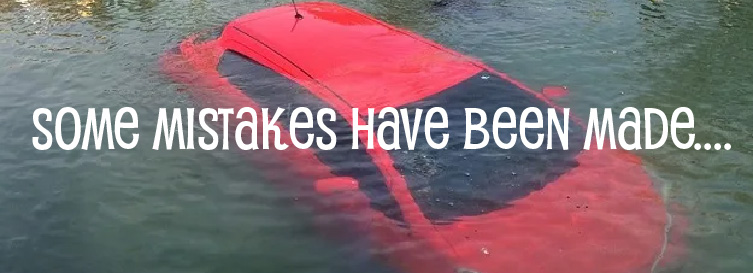
The key question in Unicolors concerned mistakes in copyright registrations. Specifically, the Court asked whether both factual and legal mistakes can be excused.
Mistakes of Fact vs. Mistakes of Law
A factual error might involve the description of the work. Similarly, a legal error might involve the correct method of publication. Under the Copyright Act, a registration remains valid if the copyright holder lacked knowledge of the mistake. Importantly, the Act does not distinguish between mistakes of fact and mistakes of law. Also, the principle that “ignorance of the law is no excuse” generally applies only in criminal cases.
Therefore, the Court held that both types of errors are excused without actual knowledge.
Also, the principle that “ignorance of the law is no excuse” generally applies only in criminal cases.
Therefore, the Court held that both types of errors are excused without actual knowledge.
Impact of the Supreme Court’s Ruling
Overall, the decision imposes a higher burden on alleged infringers. Nevertheless, copyright associations and rightsholders welcomed the ruling. For example, the Copyright Alliance praised the decision in its commentary.
It titled the article “Supreme Court (Finally) Renders a Copyright Decision That’s Not for the Birds.”
Important Warning for Copyright Holders
However, copyright holders should still exercise caution. For instance, consciously closing one’s eyes to an error is known as willful blindness. Importantly, willful blindness will not save a registration from invalidation.
Courts may interpret willful blindness as knowledge of the error. If so, the registration could still be invalidated.
Other articles on Copyrights: Non-Fungible Tokens and Copyrights
Deferred Subject Matter Eligibility Program
The USPTO is implementing a pilot program called the Deferred Subject Matter Eligibility response.
The point of the program is to defer the whole question of subject matter eligibility until a later stage of patent prosecution.
Deferring subject matter eligibility allows examiners to first see if the invention clears the 112, 102, and 103 hurdles. If it is struck down in one of those categories, then no time is wasted arguing over the more difficult question of the eligibility.
For more information, check out the USPTO page: https://www.uspto.gov/patents/initiatives/patent-application-initiatives/deferred-subject-matter-eligibility-response
Postscript: The program ended on July 30, 2022 and is no longer active. The results were not what was hoped for.
For related articles on Patent Eligibility: Supreme Court: less focus on patent matters post-Alice
European Unified Patents Update
Ratification of the Unified Patent Court Protocol
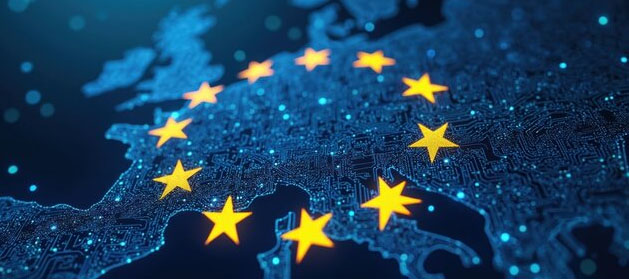
We posted an update in November 2021. All 13 countries have now ratified the Protocol on Provisional Application of the Unified Patent Court Agreement. The European Union is now in the process of putting the court together. It may be ready within the year.
Introduction of the Unitary Patent and Unified Patent Court
The proposals call for a Unitary Patent covering participating member states. A Unified Patent Court will have jurisdiction over the litigation aspects. There is also a provision to opt out of this.
Cost Considerations for European Patent Protection
There may be a cost savings only in the event you’re seeking a patent in four or more countries. If you were only seeking patent protection in one country, it would be cheaper to prosecute in that country alone.
But this could be a great option for those seeking protection across Europe when the details are all worked out.
Transition to Unified Patent Court Litigation
It should also be noted that Unified Patent challenges will eventually be heard only in the Unified Patent Court. However, there will be a temporary hybrid situation allowing litigation through national courts.
Learn More from the European Patent Office
More information is available through the European Patent Offices page.
Venner-Shipley, one of our UK associates has provided an in-depth analysis found here.
Related articles on the European Unitary Patent: Unitary Patent in Europe
Valentine’s Day Video
We’ve put together a little video about Valentine’s Day.
First, we give the historical background about who Saint Valentine was, and how he came to be celebrated. Then the transformation from a feast day to a commercial holiday for lovers. Finally, we give you some Valentines-related patents, and then wish a happy valentines to all of our inventors trying to make the world a better place. Happy Valentine’s Day!
Supreme Court: Less focus on patent matters post-Alice
Alice v CLS (2014) was a landmark case for patent eligibility. The decision held that Alice’s patents were invalid because the claims were drawn to an abstract idea. Implementing them on a computer wasn’t enough to transform the abstract idea into patentable subject matter.
The Supreme Court saw numerous patent related cases in the wake of Alice.

However since then, there has been much less focus on patent matters. 2014 saw 6 patent related matters appear, Alice being the first.
The subsequent years saw:
2015 3 cases
2016 2 cases
2017 0 cases
2018 3 cases
2019 3 cases
2020 1 case
2021 2 cases
You can learn more about the Patent Beast Comics here.
Artificial Intelligence as Inventor
What is DABUS and How Did It Invent
An AI machine program called DABUS was created as a series of neural networks trained with general information. One of the support team is Dr. Stephen Thaler. Thaler claims DABUS was not made to solve a specific problem in a particular technology area. It certainly was never trained with specific technical data relevant to the invention. However, DABUS, without human assistance, created a novel solution to a problem. That invention has been the subject of patent applications in Europe, the UK, and the US, and in South Africa.
Patent Offices Require Human Inventors
Most patent offices have a requirement that inventors be individual human persons. The US, the UK and Europe all rejected Thaler’s patent application on behalf of DABUS for that reason. South Africa has granted the patent application, but their procedures don’t require a substantive search and examination of patent applications. If the paperwork is in order and the requirements are met, the patent will be granted.
Historical Reasons for Human-Only Inventorship
There are various traditional reasons for requiring individual humans as inventors. The language of the Patent Act seems to require a natural person. It’s loaded with terms such as “whoever”, “himself/herself”, and “individual” in referencing the inventor. There are also actions described that can only be performed by a human being, such as directing an inventor to execute an oath or declaration.
Legal Conception and the USPTO Standard
There is a further consideration based on the legal tests for ‘conception’. According to the USPTO, these tests consider conception in the human mind, meaning only natural persons can be considered inventors.
How General AI Challenges Traditional Patent Rules
These traditional arguments, however, are running up against the evolving nature of artificial general intelligence. Narrow artificial intelligence environments have been used to identify compounds for use in some drugs. Human input, however, set up the parameters and human input was required to test the compounds.
Such discoveries really don’t meet the kind of inventive conception patent offices are referring to. But in the case of general AI, the environment itself was created by humans, but not to solve specific problems. In this case, the AI generated an invention- came up with a solution to an existing problem- without specific prompting. Dr. Thaler argues he can claim inventor status for the AI, but he added no conceptual step in the particular invention. Therefore it wouldn’t be just to list him as the inventor.
Can AI Be Considered an Inventor?
Counter arguments for these might be a less textual, broader interpretation of the language. Clearly, AI was inconceivable when the original tests were outlined. And inventor identity requirements have more to do with dispute resolution than determining the source of innovation.
Arguments for Expanding Inventorship to AI
Why should the system be opened up to include AI environments as inventors?
One argument, by Ryan Abbot, is that patent protection for AI generated works will incentivize innovation. No one is suggesting that patent protection would motivate an AI. Expanding inventorship would motivate those who develop inventive AI to continue doing so, which, in the end, would benefit society.
Incentivizing Innovation Through AI Patents
The patent system is designed to protect inventors, while disclosing information that would be of value to society. Failing to allow AI generated inventions would discourage businesses from using it, even if it proves more effective than people in solving certain problems.
Protecting Human Inventors While Listing AI
There is also an interesting twist to allowing AI to be listed as the inventor. It may protect the rights of human inventors. Listing the owner of the AI as the inventor for an AI generated invention isn’t unfair to the AI. It can’t have any concern about such a matter. But it does allow people to take credit for work they didn’t do. This may ultimately devalue human inventorship, by putting the work of someone who asks an AI to solve a problem on the same level as someone legitimately inventing something new.
The Future of AI in Patent Law
AI systems would still not own patents since they lack the legal and moral rights to own property. But listing an AI as the inventor isn’t about providing rights to machines. It’s about protecting the rights of human inventors and the integrity of the patent system.
For more on AI and Inventorship: Can an AI be an inventor?
Appealing Patent Decisions- How likely are they to be reversed?
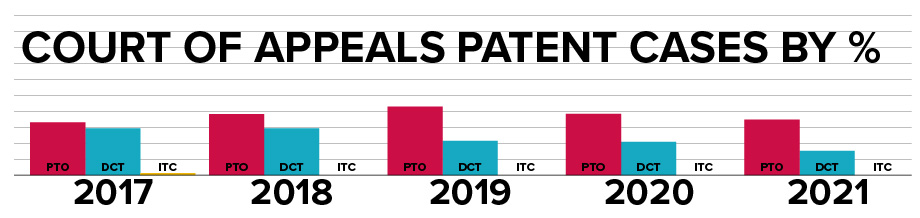
Over the last 5 years (FY 2017-2021) about 61 percent of the cases at the Court of Appeals for the Federal Circuit (CAFC) concern patents. There are three sources for those cases: District Courts, the PTO, and the International Trade Commission (ITC).
Of those three sources, the PTO has provided 63% of the cases, the District Courts have provided most of the remainder, and the ITC has provided a handful.
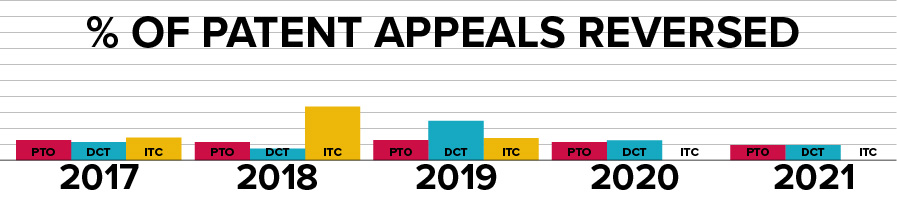
How many of these cases were reversed? Roughly 12% were overturned overall.
Of the cases that came from the PTO, 11% were reversed. Of the cases that came from the District Courts, 13% were reversed. Finally, of the handful of cases that came from the ITC, 12% were reversed. But the last two years produced no reversals from the ITC-originated cases. 2018 saw 33% of the ITC-originated cases reversed, while 2017 and 2019 saw 14% and 13% respectively.
So overall, patent related appeals take up just under 61% of the CAFC’s total cases, and of those, only about 12% are reversed.
All data was taken from the US Court of Appeals for the Federal Circuit’s Reports and Statistics pages.
https://cafc.uscourts.gov/home/the-court/reports-statistics/