NEWS

Standards Essential Patents

Standards Essential Patents word graphic

What are Standards Essential Patents?

Standards Essential Patents (SEPs) cover technological inventions necessary to satisfy a technical standard.  Think, for example, of MP3 music compression technology. 

Why Anyone Must Be Able to License SEPs

Essentially, everyone needs to license patents covering aspects of the standard.

Essentially, everyone needs to license patents covering aspects of the standard. So it is critical that everyone has a reasonable opportunity to license the patent at a reasonable, non-discriminatory fee. This is the FRAND license.

Global Licensing Rates

Naturally, some bad actors try to circumvent that arrangement, by seeking excessive rates from potential licensees.  And that problem has historically been compounded by different rules in different jurisdictions. 

In August 2020 the U.K. Supreme Court took a giant step towards international conformity. It held that English courts have the power to set global licensing rates for multinational patent portfolios under European telecom standards!

FRAND (Fair Reasonable And Non-Discriminatory licensing)

In May, the German Federal Court of Justice recently issued a landmark, 41-page decision that could well make Germany the “go-to” venue for patent owners in future FRAND licensing disputes.  In Sisvel v. Haier, the Court held that patent owners could satisfy FRAND requirements even if they provide different rates to competing licensees, at least when dealing with larger, multinational patent portfolios.  More information here.

Indian IP Office Extends Deadlines

The Controller General of Patents, Designs and TradeMarks (The Indian IP Office) has extended all trademark deadlines until further notice. 

Canadian IP deadlines extended again to August 10, 2020

The Canadian Intellectual Property Office (CIPO) has again extended deadlines on IP matters until August 10, 2020. Deadlines had previously been extended until July 17, but given the continuing impact of COVID-19, further measures have been taken to mitigate the disruption.

Herbs ‘R’ Us Branding Gets Wrecked

Blazing the Trademark Trail: Herbs ‘R’ Us Gets Smoked

Canadian cannabis dispensary Herbs ‘R’ Us, rolled out a logo a little too reminiscent of the well-known Toys ‘R’ Us logo.

Herbs 'R' Us logo

Toys ‘R’ Us, feeling a little burned by the effort, sought to bring them down, and sued in Canadian Federal Court.

They claimed Herbs ‘R’ Us infringed its trademark and left consumers in a haze about where the brand came from. Oh, yeah, and diluted* the buzz attached to the Toys ‘R’ Us trademark.

Puff, Pass… and Pay: The Court Weighs In

The Court accepted the case, but blunted the infringement and confusion complaints, having found it would be highly unlikely that consumers would be either dazed or confused into thinking Toys ‘R’ Us had started selling pot.

Buzzkill: $30K Damage for ‘Herbs’ Hijinks

The Court did, however, find that Herbs ‘R’ Us logo would, in fact, depreciate the Toys ‘R’ Us brand and ordered Herbs R Us to cease using the name, deliver up any packaging in possession for destruction, and pay $30,000 CAD in damages.

* dilution is a technical term in trademark infringement. You can find a good definition of it on our Trademark Infringement and Litigation FAQ page, along with other terms relevant to this case.

USPTO Launches Fast-Track Appeals Pilot Program

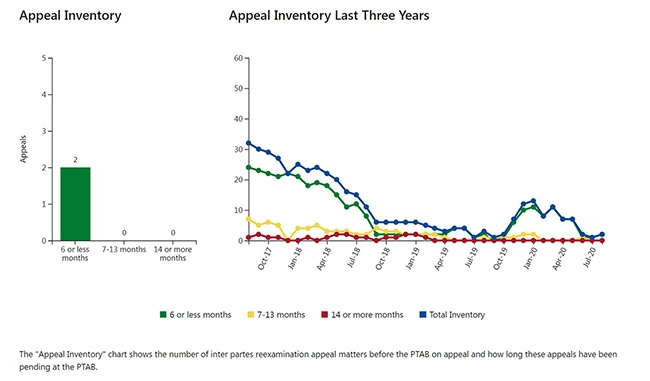
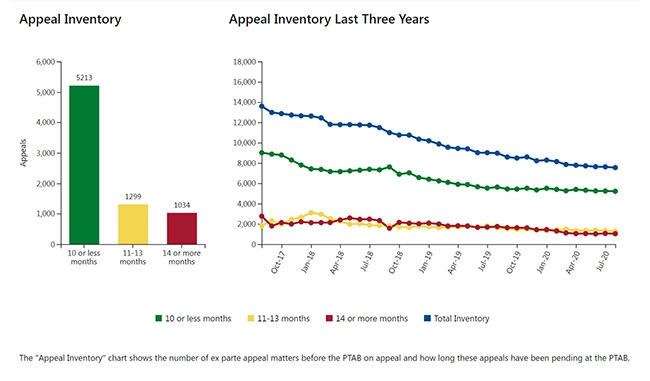
On July 2, 2020, the USPTO launched the “Fast-Track Appeals Pilot Program” which allows applicants to speed up the examination process on their most important inventions and get a decision in half the time of a normal application. The fee to Fast-Track an appeal is $400, and the USPTO estimates that an appeal will be read in six months under the program.

Trademarking generic.com

word graphic: generic.com

Supreme Court Landmark Ruling on Generic.com Trademarks

On June 30, 2020 the Supreme Court handed down a landmark ruling in trademark law. It decided generic terms can be registered as trademarks when followed by .com.

Why Generic Terms Were Historically Unregistrable

Trademark law had, up to this time, held that generic terms are not registrable*. For example, getting a trademark on the word “Farm”. Farm is a generic description of a type of property. As such, it would be improper to grant rights of usage for the word to one party. In the same way a generic term couldn’t be combined with “Inc.” to bypass the principle, the PTO held that adding “.com” to a generic term yields a generic composite, not a distinctive mark.

Booking.com Challenges the USPTO

It was this basic principle that led the USPTO to reject Booking.com as eligible for trademark.

So Booking.com took the case all the way to the Supreme Court. The Patent and Trademark Office asked the Supreme Court to hand down a clear decision upholding the prohibition. It argued that overturning it could lead to large companies like Booking.com, abusing smaller companies that use the generic term “booking” anywhere.

Supreme Court Decision: Consumer Perception Matters

Instead, the Supreme Court, by an 8-1 decision, rejected the USPTO’s request. It found that if consumers perceive a term as not being generic, then it isn’t generic. This reasoning is consistent with trademark law. The whole point of which is to protect consumers in their ability to know the source of goods and services. But the Court was clear that while they could not create a bright line rule prohibiting generic.com trademarks, neither would such names be automatically considered distinctive. A substantial amount of evidence would be required to convince the PTO that consumers view such names as trademarked.

Implications for Future Trademark Applications

This ruling will likely lead to another gold-rush of companies trying to register such names. Lacking the bright-line rule, the PTO will have to consider the merits case by case. We expect there will be no shortage of registration attempts and subsequent challenges over the marks.

See our FAQ page on Trademark Basics: What are the levels of Distinctiveness?